By 9am I was back on the Wytham ward where it had all started around 24hrs before, yet so much had changed: I was no longer on the transplant list, my days would no longer be taken up by haemodialysis and daily injections were going to be a thing of the past. I was sat hooked up to wires, tubes but was feeling amazing. I was sure someone would soon come and wake me from this dream.
…They didn’t! Gary sat at my bedside holding my hand as I drifted in and out of sleep, the pain was manageable, more like a dull aching pain and it was only when I moved to re-adjust myself that I even noticed it. I was hooked up to pain relief that I could administer myself so, with one click of a button the pain eased quickly. The euphoria of being given a new lease of life was what I was feeling most. I waited for that feeling to subside but it didn’t and it hasn’t yet.
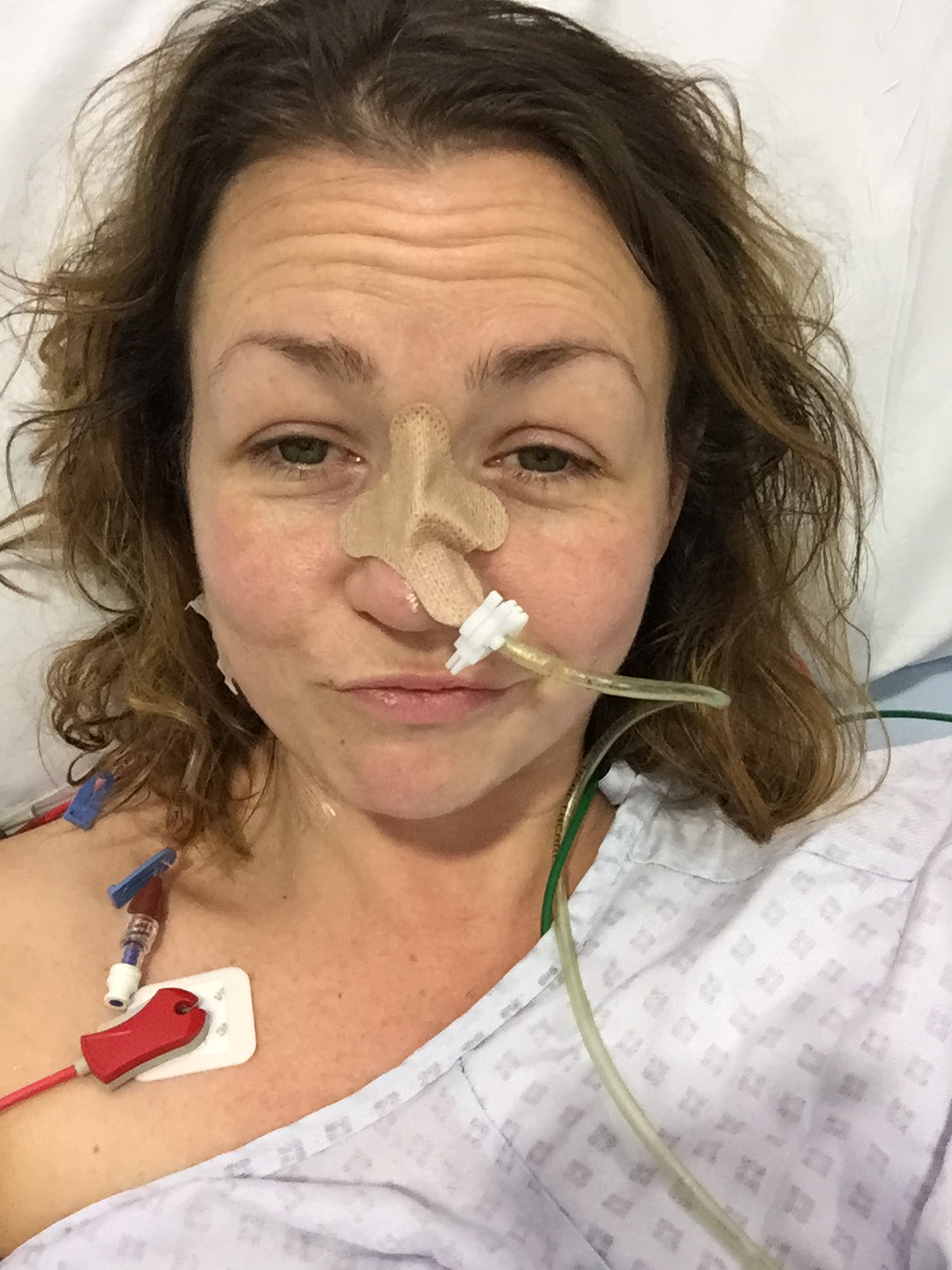
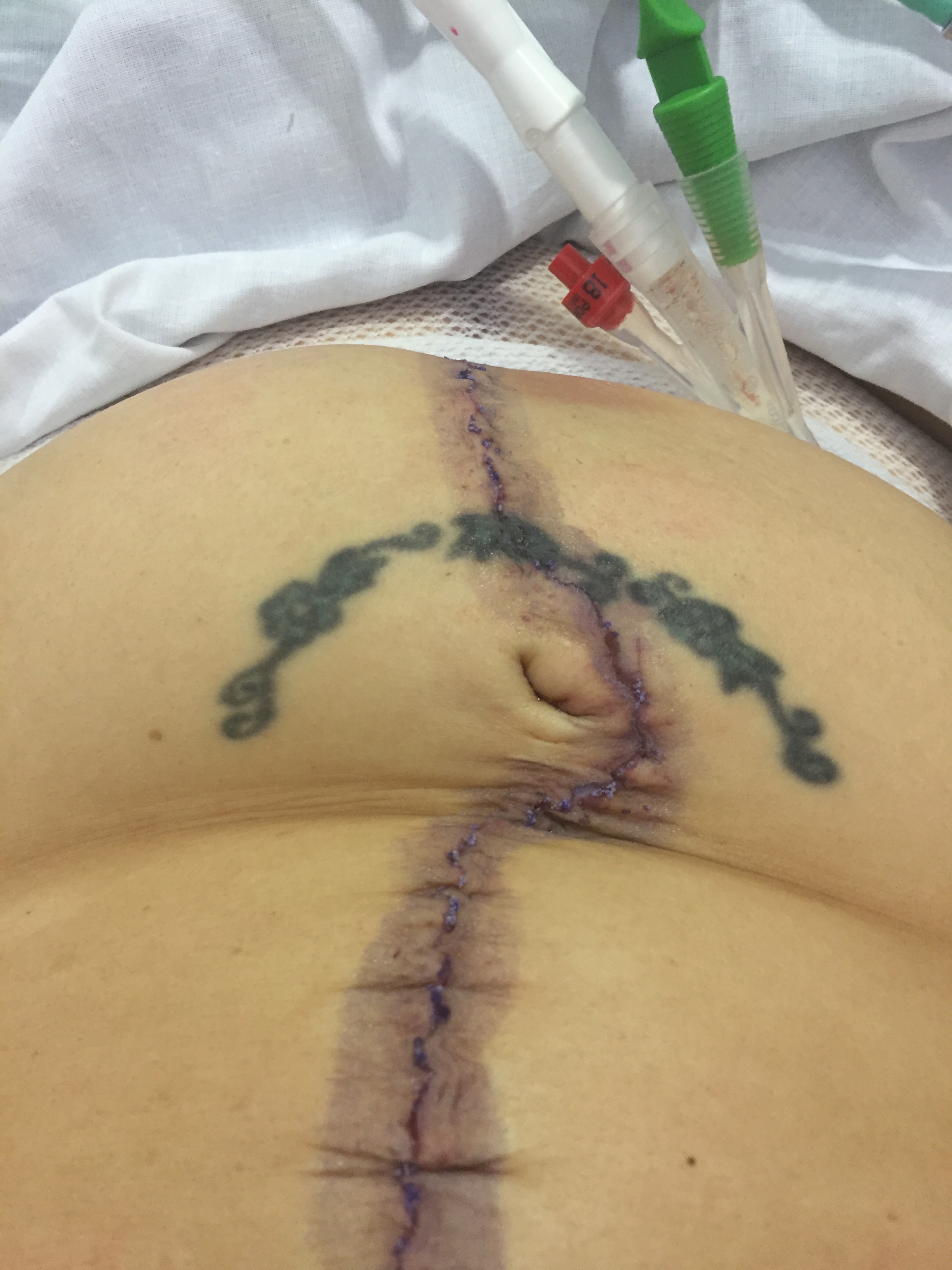
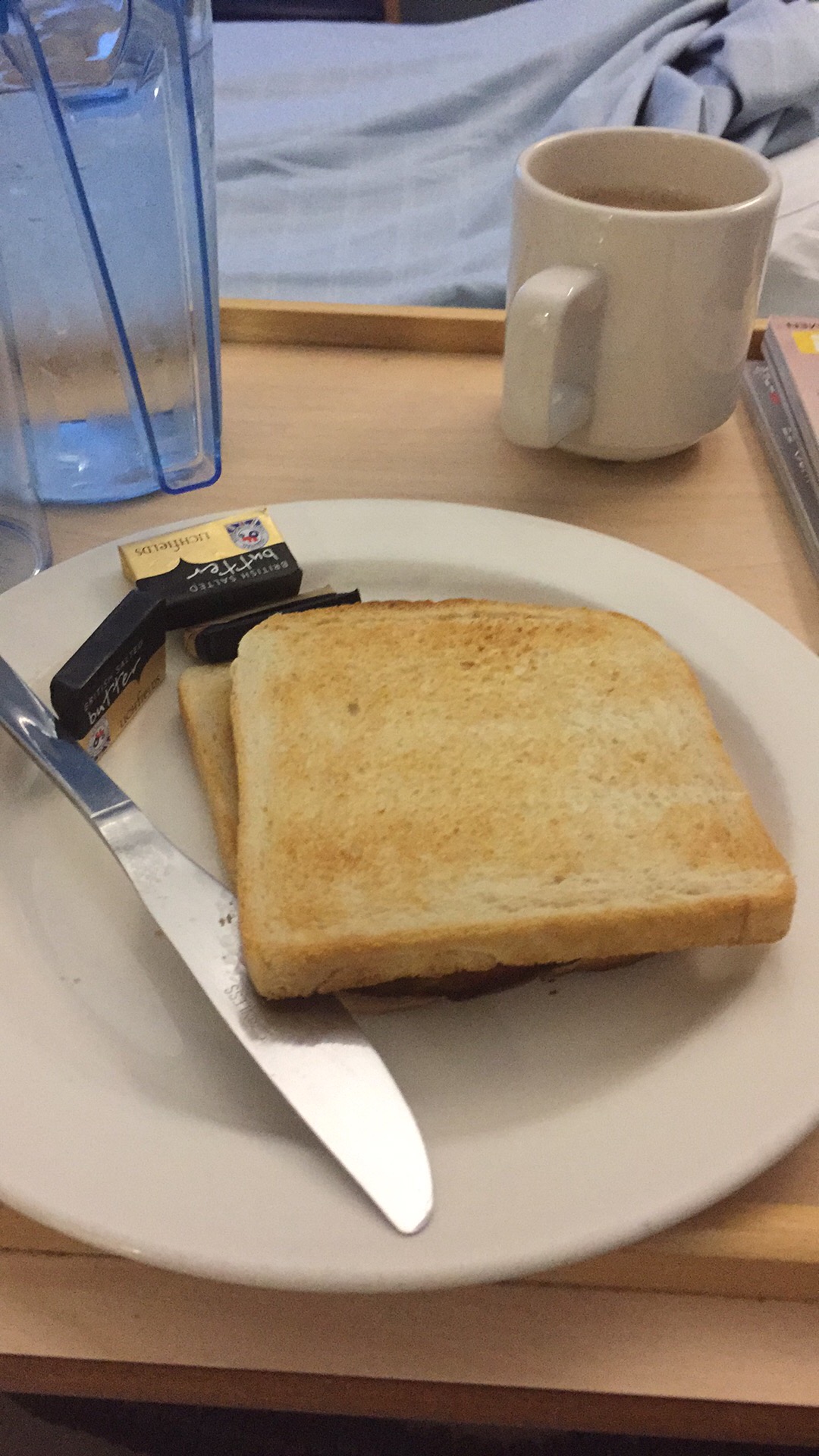
The first morning post transplant I was given the breakfast of Kings (well it felt like it at the time) – Tea and toast. It took a while but surprisingly I was feeling hungry and polished it off with no problem. Soon after a Physiotherapist popped in and to my amazement got me to my feet and guided me around my bed – wires, tubes and a catheter all complicating my route but I did it. My only fear was that my insides would come tumbling out of my gown, I was reassured I had been securely stitched and glued together and would be fine. It didn’t stop me placing my hand over the top of my stomach…just in case!
No sooner had I gently positioned myself back onto the bed than the room filled with what appeared to be a swarm of angels – they were actually the Surgeons, Registrars and Doctors that had been involved with my treatment and surgery since being on the ward. I wanted to be able to jump up and hug them all, the team in front of me had taken my Donor’s organs and put them into my body with great skill and precision; Overnight they had taken away the illness that had caused so many complications. ‘Surgery went well and although we had to remove your ovary’ the Surgeon said. ‘Sorry….what?? What ovary??’. From waking up, moving to the ward and snoozing no one had told me about the fist sized cyst they had found on my right ovary, which had to be removed and was being sent for testing (although they were pretty certain it wasn’t cancerous after having called in a Gynaecologist and Oncologist during my surgery). My mind was blank and normally that sort of news would worry anyone but just a few hours before my future health was in their hands, my trust was theirs and I knew they would do what was best for me. The only emotion I felt was for Gary (my next of kin), he had had to give the go ahead for the ovary to be removed on my behalf when I was under anaesthetic; as this was seen as another operation for which I hadn’t consented. Receiving any call mid way through your wife’s surgery must be heart-wrenching, to this day he says he had no doubt over what I would have wanted, 1) Have the ovary removed and continue with the transplant, receive the organs and change my life or 2) close me up, wake me up ask me for my decision and reschedule for the ovary to be removed and then wait again on the transplant list for another well match donor. I’m pleased he knows me well enough and we had talked about how important this transplant was going to be for us so he could confidently decide on my behalf.


Over the next day or two the wonderful Nurses got me into a routine. Basic obs every couple of hours: blood pressure, pulse and blood sugar. Daily blood taking, weigh in and pancreas amylase testing at breakfast time (a test on the fluid from the pancreatic drain in my side to detect any inflammation in the pancreas; a high reading can show that there is an issue with the transplanted organ, even before blood sugars rise), catheter emptying as and when needed and medication at 8am and 8pm precisely. Woken up at 6am and the ward was quiet by 10pm. The first couple of days are a blur, I had lots of lovely visitors, not staying too long as I was sleepy but I was starting to really feel the benefit of this beautiful gift I had been so selflessly given.
By day three the grogginess from the anaesthetic had worn off and I could now see the difference. The colour had started to come back in my skin and the fluid was starting to flush out of my system. My ‘fat feet’ were starting to disappear, my cheekbones were coming back and there was a definite glint in my eyes. I felt stable, its hard to explain but I had eaten, slept, moved about and even devoured a punnet of grapes and I still felt well. No high or low blood sugar symptoms nor did I feel exhausted from dialysis; I just felt normal, if not a little bruised.


I had lots of visitors, family and friends (who brought me grapes, a Hospital Survival kit, chocolates, a novelty tie and this beautiful ‘Wishing Tree’ which made a fantastic Christmas Tree which all the Nurses came to admire) but also the Transplant Coordinators (who had called me out on my previous false alarms), the Nurses from the dialysis ward, my Consultant and even my Boss! All pleased that my call had finally come and the operation had been a success. Everyone said how well I looked (all things considered) and with every day that passed I began feeling stronger and stronger. I was told to walk around the ward a couple of times a day, cough three times (twice a day) and keep my legs, feet and hands moving to get the circulation going, so I did. I didn’t push myself too hard, I did what I was told and put my feet up the rest of the time – following orders does actually work (don’t tell my Boss!). Slowly but surely over the next couple of days the drips, catheter, nasal tube and neck line all came out. My pancreatic drain being the last one out on day 5. Each a massive milestone, a way for me to set short term goals to get me through my time on the ward.


Daily blood results came back showing that my organs were continuing to improve. When your kidneys start to fail (which mine did about 5yrs ago) your Creatinine is measured (this is a blood test to show how well your kidneys pass out Creatinine which is produced by your muscles) and your eGFR is also measured (this uses your Creatinine result, your age and sex to give you an approximate % of kidney function). These are both monitored over time to show a trend of how well your kidneys are working. Before transplant whilst I was on dialysis, on days off my Creatinine reached 549 at its highest – it has come down as low as 116. My eGFR was 10% on the day I started dialysis and has since peaked at 48%. I (quite literally) have not felt so good in years!! And the super bonus was my organs Pam – Miss Pancreas and Ken – Mr Kidney worked right from the get go. Occasionally they can take time to wake up and start working resulting in the recipient needing to continue with dialysis or resume taking insulin. Not mine though…as eager as their new guardian was to look after them they started straight away to look after me. My kidney doing particularly well. From hardly peeing at all to ‘super kidney peeing’ every time I drank something. At least I had my own bathroom!
On day 6 I was told that I could go home the following day, in fact I was told ‘You have done so well, we have no reason to keep you here’ and I couldn’t believe what I was hearing although I did feel great, by tomorrow I would be home with the greatest gift of all. That afternoon I had packed up my room (slowly and not lifting anything heavy of course) and couldn’t wait to tell my husband who was a little shocked to hear I would be coming home so soon but he was not surprised. He left early that evening to ‘tidy up a little’. I had images of take away cartons and mouldy tea cups but that didn’t matter, I would be going home and that’s when my new life would begin.


‘Going home day’ arrived and I began thanking every member of staff that had looked after me so perfectly during my short stay and I became tearful. With every ‘thank you’ came a tear or a wobble in my voice. The realisation that I had gone in broken and would be going home in a matter of hours fixed was overwhelming. Gary arrived early and I had two things to do before going home 1) get through my glucose tolerance test and 2) go and see the ‘Old boys’ on the dialysis ward. By 10am I had received a bottle and a half of Lucozade, I drank it and was allowed to go off the ward but had to be back to have a blood test in 2hrs time to see how Pam had coped with the massive amount of sugar I had just consumed. Feeling full and sugar laden Gary found a wheelchair and we made our way off down the ward.
One of the joys of walking around the ward was seeing others who were also on the same journey; sadly some were returning because of complications but all were in good hands. We shared empathetic looks as we passed in the corridor or walked passed one another’s room doors. We were just about to leave the ward and I recognised a face. Someone I knew but not from this ward. ‘Mary…!’. Mary had been on the same dialysis ward as me albeit on different shifts, but we often passed one another and had not long ago met at the ‘before and after dialysis communal loo’, neither having had made any progress. To see Mary in bed having (literally) just had her transplant was amazing. I shared her dialysis struggles and her life too had just changed. The Organ Donor Register and Transplant Coordinators had come up trumps once again. After sharing our congratulations with one another and passing her adoring (and relieved) family on our way out we rushed to the dialysis ward to share our news.
Before leaving you are seen by the Transplant ‘going home team’, Ali Smith (a Transplant Nurse Practitioner) came to see me and talked me through how clinic works and what to do if there was a problem whilst I was at home. She sat on the bed with me and told me to expect highs and lows. She said that some days will be easier than others, I needed to give my body time to recover and should take things in my stride. She also spoke about my donor. Had I considered ever writing to the Donor’s family? If I did they would happily coordinate this for me and so the letter could be more personal they could tell me a small amount of information: the sex of the Donor and a rough age. I already knew the answer, I had thought long and hard about this from the day I was listed on the register – ‘Yes in time’ I replied. Ali had a certain way about her and I didn’t realise until a week or so later when I was at home crying every time I talked about the Transplant – I instantly thought about my Donor and her family, especially as it was so close to Christmas. Before I left the ward Ali told me the age of my Donor, 25-35yrs and that my Donor was a female. Ali had experience speaking to recipients and this showed, actually I could feel it. I sensed she had seen many go home and many other happy people start their journey before me. She wanted me to know that with highs sometimes there are lows and I just needed to be aware of this, ‘It’s normal, it’s ok’.
Feeling prepared, relived and having said thank you and goodbye to everyone on my way out knowing I had shared the most life changing experience with these people by the time we got to the car park the tears were freely flowing. ‘It’s normal, it’s ok’. This was the start to knowing what Ali meant.

I can’t begin to thank everyone enough to truly show how grateful I am for the care and attention I was given while I was on the Wytham Ward in Oxford. From the lady who brought the food menus around, Transplant Coordinators (especially Simon & Khush – thank you for my precious call) and Health Care Assistants to the Pharmacists, Surgeons, Registrars, Doctors and my humble Consultant (Phil Mason). Thank you!
Special mention to both Georgios Vrakas and James Barnes (my Surgeons) who gave me the bad news on my previous unsuccessful calls but who came good in the end – skilfully plumbing in my new gifts and managing to match up my tattoo pretty perfectly!
I do have to show a massive appreciation for the Nurses who tirelessly ensured I had the dignity to recover in comfort, not in pain and who always brought a smile with them into my room and are the true heroes of the NHS. Joanna – You were an absolute star!
Thank you to all my family and friends who showed their support, you know who you are x
To my husband – You’ve got your wife back!!
Last but not least ‘thank you’ is not enough to show my gratitude for my Donor and her family. Without their generosity and their will for someone to live a better life I would not be sat here today with such a passion and excitement for life, feeling better than I ever have and doing all I can to raise awareness of Organ Donation and it’s importance. I hope to one day, when I find the right words to say write to my Donors family to express how I feel, but for now – if you by some chance read this, Thank you x

 Diaries of Lea